
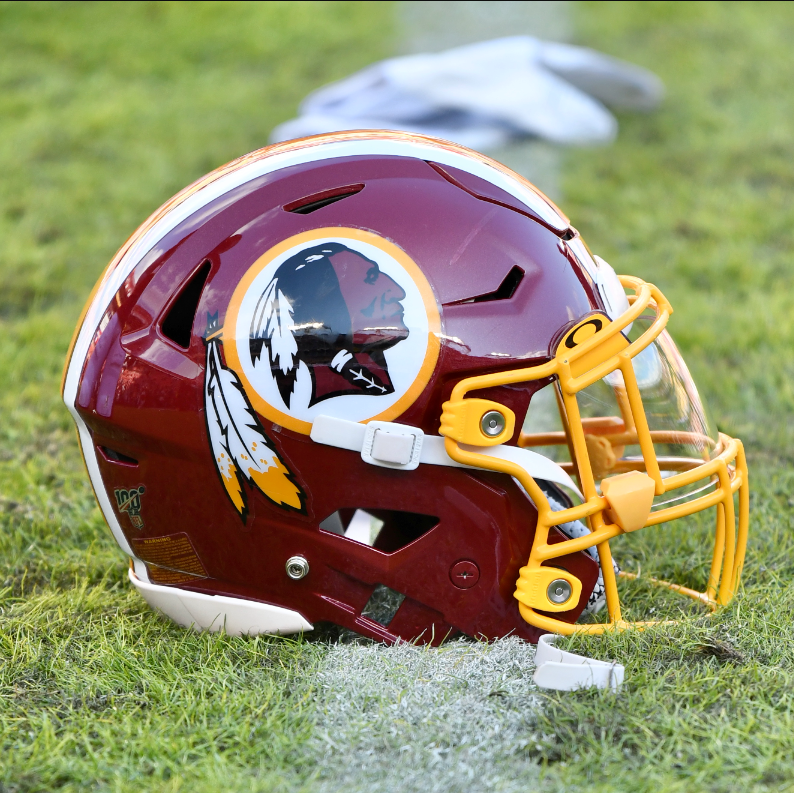
Wherever you are in the United States – no matter what city you hail from, reside near, visit frequently, or even just the place you’ve chosen to be your favorite: You’ve got a professional sports team. If you’re in Washington D.C., you have more than a few options to follow along a wide array of sports: baseball has the Nationals, who are now celebrating their most recent MLB World Series win; NHL’s Washington Capitals are ranking 3rd place early in their division, and the Major League Soccer team D.C. United qualified for the upcoming playoff season. There is one team though, that does not share a current record similar to it’s city’s counterparts. The Washington Redskins’ 2019 season stands at 1-5 this far, earning them a spot at the bottom in last place of their conference. The team’s less than favorable record however, doesn’t even hold a candle to what can be considered the absolute worst aspect of the team: the offensive, dated moniker they’ve carried since 1933. “Redskins!”
The Washington Redskins’ name has been a high profile subject of controversy for years, as it has a very unpleasant history of being used predominantly as a racial slur towards Native Americans. It even gets criticism from NFL players who formerly played for Washington. Retired All-Pro Redskins’ defenseman Jason Taylor and former offensive lineman (current NFL analyst) Mark Schlereth have both called it offensive and suggested a name change. Most recently, former Redskins’ defensive tackle A.J. Francis, who left Washington in 2018 for the New York Giants, blasted the franchise on Twitter with the hashtag “#andyourlogoisracist”. The team’s owner, Dan Snyder, shows lack of interest to rebrand, despite countless requests for change, along with suffering a persistent public backlash. At this point Snyder is set on keeping the Redskins name as it is. In a 2013 interview with USA Today, Snyder said, “We’ll never change the name, it’s that simple. NEVER; you can use caps.”
In 1992, Native American activist Suzan Harjo filed a lawsuit against the franchise, on grounds that the name “violated trademark standards against the use of disparaging names and imagery.” With this lawsuit came an overwhelming amount of claim-supporting legal briefs that only backed up Harjo’s already compelling collection against the team’s name. All together, these briefs provided documentation of the adverse effects that Native American school children were suffering because of the offensive or negative depictions of their heritage from sports team names and mascots. The United States Court of Appeals, originally vested with the responsibility of handling Harjo’s case, passed it back down to the district courts, who ultimately ruled that there was not enough substantial evidence provided to move forward with the cancellation or rebranding of the Redskins’ name. An Annenberg poll taken in 2004 concluded that 90% of those with Native American heritage “are not bothered” by the offensive title, but a response composed by 15 collaborative Native American scholars exposed flaws in the study, showing the poll to reflect opinions more from the expressive direction of “white privilege” and “colonialism.” This is because it is exceptionally difficult to accurately survey the Native American population, since its size is not only relatively smaller than other ethnic groups, but also the majority of those who identify as Native Americans living on reservations do not have landline phones, thus hindering the poll’s overall ability to contact and record opinions of certain groups and tribes.
More than 4,000 schools have moved away from and discontinued the use of Native American mascots and changed the names of their respective sports teams, and they aren’t the only ones to wise up and make some much needed changes.The University of Illinois at Urbana-Champaign, The University of Oklahoma, Marquette University, and Stanford University are all among those NCAA teams that have dropped offensive names and mascots for their teams over the decades. Most notably, Cleveland’s MLB team, the Indians, finally made the decision to permanently remove the cartoony “Chief Wahoo” logo from player jerseys and team merchandise at the start of the 2019 season. The offensive, grinning Indian logo was replaced with a more classic, and much less offensive letter “C”. ‘Atlanta’s MLB team, the Braves (another team with a name derived from Native American culture), did not give stadium attendees the customary foam tomahawk as they have in past seasons at their most recent playoff game. It’s moves like these that make it clear that this ethical change has influenced our sports culture all the way up to the professional level.
With stadium attendance seeing increasingly low numbers, it’s time for Washington’s NFL team to take a page out of the books of every other respectful team in the country and make the change. Is the “Washington Presidents” too close a moniker to their rival Patriots? A name like the “Washington Owls”, or “Coyotes” both seem to be fierce appropriate alternatives for a team still carrying an insensitive logo, and a bigoted name widely criticized by athletes, fans, analysts, and prominent figures alike. The Washington Redskins is a team that is suffering in more ways than one. Even if the team itself does manage to turn their losing record around and find success on the field, the franchise’s fans and stadium attendance continues to dwindle, and likely won’t stop until they take a serious reevaluation of the image of their brand, and the sloppy misrepresentation of the culture that it is named after.

 Keith Hudak