
-
About Me
I’m a self-motivated and ambitious communications professional with 7+ years experience in both small business and corporate environments. If you’re in need of a versatile writer and articulate speaker with a demonstrated ability to take projects from inception through delivery, please don’t hesitate to reach out.
724.859.5636
-
Non-Profit Taps California Communities to Help Spread Information, Not Wildfires

Watch Duty, a non-profit dedicated to mapping and tracking wildfires, has committed itself to being the first (and so far, only) 24/7 wildfire monitoring service – helping to curb the flame destruction that becomes more synonymous with California’s dry season each year.
Catching Fire
Wildfires are notoriously difficult to monitor, which limits the amount of forewarning that can be provided to those potentially affected.
Watch Duty has identified that this is a critical issue and has centered its mission on delivering around-the-clock tracking by a team of fire professionals comprising radio-operators, firefighters, and engineers. It then disseminates this information to citizens via the Watch Duty app, which officially launched in August 2021.
The app has garnered over a quarter of a million downloads as of June 2022, and it encourages non-affiliated or unofficial agencies and amateur “reporters” – locals, enthusiasts, and social media group moderators – to actively participate in the communication channels that Watch Duty utilizes to monitor a traveling blaze with as much precision as possible. Key features of the app include live, real-time wildfire updates for all of California’s 58 counties, maps, news, and projected travel path for active blazes.
Trailblazing Innovation
Prior to Watch Duty’s inception, residents of California’s most vulnerable areas could only rely on automated phone recordings and voicemail notifications via their county Sheriff’s department for the most up-to-date and accurate information regarding the spread of approaching wildfires in their vicinity. However, the issuance of these notifications oftentimes does not reach the recipients with enough advanced notice to allow them to properly prepare and implement safe evacuation procedures – leaving many of those impacted to either live in constant fear and neverending preparation, or the undying feeling of being perpetually behind-the-eight-ball when it comes to blaze updates.
An even more concerning and dangerous byproduct from lack of information is the spawn of misinformation on social networking platforms like Facebook and Twitter. Watch Duty aims to effectively eliminate any opportunity for hearsay by providing factual information that is as timely as it is accurate. The company website displays a strict code of conduct that pledges internal fact-checking on reporting as well as a series of principles that bars publishing any information based on speculation – all of Watch Duty’s information is confirmed in advance from a bonafide source such as a Sheriff’s Department, CALFIRE publication, radio scanner transmission, etc. prior to publication, and it is presented in real-time to give the listener optimal advance warning if a flame is approaching. Some of Watch Duty’s other core values include a promise to only deliver relevant data that is free from opinion or editorialization and the prioritization of information accuracy over notification speed.
Keeping the Flame Burning
Currently, Watch Duty’s services only cover the state of California, but the group is interested in expanding into neighboring states, such as Oregon, Nevada, and Arizona. The app also implements OpenStreetMap technology, which would allow Watch Duty to expand its service area to corners of the United States far beyond California.
Following the surge of positive reception that Watch Duty’s app has obtained, there has been an outcry from some users to expand the app to track other types of natural disasters and emergencies, such as flash floods, tornadoes, and hurricanes. It seems, at least for the time being, that Watch Duty currently self-identifies solely as a wildfire-awareness entity, although it does appear that the sky’s the only limit for this growing organization.
-
Student drug use at Indiana University of Pennsylvania

INDIANA, PA. – In 2015, Indiana saw 242 drug-related hospital emergency room visits, according to usdrugtrends.com. Of those admissions, 69 were attributed to heroin usage. Xanax and cocaine were second and third most common, Xanax, a prescription medication used to treat anxiety and panic disorders, accounting for 35 visits and cocaine for 30.
Indiana University of Pennsylvania (IUP) Marketing senior John H. Jones, 21, said he does not believe there is a significant drug problem in Indiana, counting both the student and resident population together.
“Where I’m originally from [Uniontown, Pa], there is a drug problem. When I go home, I consistently see drug users and drug-related arrests. If Indiana had a drug problem, the police force would crack down much more than they already do, because that’s how it is in my hometown,” Jones said.
Jones, although not a drug dealer, is a casual drug-user himself, smokes marijuana habitually and has experimented with multiple drugs on multiple occasions in college, including cocaine, hallucinogens and the abuse of prescription medications. He said he has witnessed — and participated in on multiple occasions — the use of illegal drugs among IUP students. A few specific drugs remained off the list of those he was interested in experimenting with:
“I’ve seen countless students abuse Percocet more times than I can count, and I’ve seen a few students [inject] heroin; neither of which I’m interested in trying,” Jones said. Excluding his daily use of marijuana, Jones said that he uses drugs approximately 9-11 times each month, mostly Thursday-Sunday. He said that he has noticed a very minuscule, negative change in his grade point average, attributed to his recreational use of drugs, but overall has not shown a significant change in his academic status as an IUP student. He believes that his consistent use of marijuana helps him to concentrate on academic responsibilities rather than hinder his ability to succeed, although he has noticed that it is not always that way for some students.
“The heaviest drug users are the people that are not here anymore. I don’t consider myself to be a heavy user and I’m very responsible about my drug use,” Jones said. “I’ve noticed marijuana is different. “I’ve seen people who are stoners (habitual marijuana users) do awful in class; I consider myself a stoner and I do great in class. it just varies from person to person when it comes to marijuana.”
As a college senior looking back at his freshman year at IUP, Jones said the popularity of drugs among students has shifted based on substance.
“When I was a freshman, everybody was abusing prescription pill medication, and a lot of them became zombies and dropped out of school,” Jones said. “A lot of students are doing cocaine now, it seems. The easiest drug for students to get, though, is Adderall. Students can get Adderall easier than they can marijuana most of the time.”
Ann Sesti, the assistant director of IUP’s Alcohol, Tobacco, and Other Drugs department located within IUP’s Center for Health and Well-Being, said that it is difficult for the IUP campus administrators to successfully conduct a survey regarding student drug use and be confident in their results.
“Individual in-class surveys given to each student is ideal, but doesn’t happen,” Sesti said, referring to a recent survey regarding student drug usage administered exclusively to IUP students living in on-campus residence halls. “In the 2014-2015 academic year, approximately 550-680 students completed the survey, but the problem is that I’m not sure that the students who are doing the drugs are the same students who are taking the surveys.” [the variation between the aforementioned figures is because not all students that completed the survey answered all of the survey questions].
In IUP’s 2014-2015 academic year, out of all on-campus residence hall students who completed the survey:
● 13.6% of students surveyed said that they have smoked marijuana since attending IUP.
● 1.1% of students surveyed said that they have consumed cocaine since attending IUP.
● 0.3% of students surveyed said that they have consumed heroin since attending IUP.
● 2.5% of students surveyed said that they have consumed Adderall since attending IUP.
Sesti, who sat at her desk with exceptionally professional composure and stature, responded to the interviewers’ questions with a positive tone with every answer she gave. “I have not heard of a heroin overdose of a traditional, on-campus student in a long time,” said Sesti, a state-licensed professional counselor. “IUP is no different than any other community when it comes to issues like this.”
Sesti, who has been the assistant director of the Alcohol, Tobacco and Other Drugs branch of IUP’s health center for 25 years, received both her undergraduate in psychology and graduate degree in counseling psychology from Slippery Rock University of Pennsylvania, located in Slippery Rock, Pa.
According to the Pennsylvania State Coroner’s website, 30 percent of drug users in Indiana are aged between 20-30 years; 40 percent are between 41-50; 10 percent is attributed to individuals 31-40, with the remaining 20 percent are 51 and older.
The state of Pennsylvania reported increasing numbers of drug usage and substance abuse. In 2012, Pennsylvania’s healthcare professionals dispensed more than 250 million prescriptions for painkillers, making it the 14th most popular state in the nation for prescription drug overdoses, according to a 2015 article on drugtreatment.com. Heroin was reported as the most common drug identified in toxicology test results in Indiana County for 2014. For the 58 counties that reported drug-related overdose deaths in 2014, heroin was identified the most in 48 counties.
Last year, 242 drug-related hospital emergency room visits were reported in Indiana, Pa. The Indiana Gazette on March 24 described this as evidence of a local “drug scourge.”
To Get Involved:
For more information about this story, or to get involved in the issues reported here, contact the following sources:
The Open Door
665 Philadelphia St.
The Atrium, — 2nd floor
Indiana, Pa. 15701
Phone: 724-465-2605
Crisis: 800-333-2470
Fax: 724-465-2610
Web: http://www.theopendoor.org
Alcohol, Tobacco, and Other Drugs Program
Center for Health and Well-Being
Suites on Maple East, Suite G59
901 Maple Street
Indiana, Pa. 15705
Phone: 724-357-1265
Fax: 724-357-4457
Email: atod-oasis@iup.edu
Web: http://www.iup.edu/atod/
Armstrong-Indiana-Clarion Drug and Alcohol Commission
Indiana Office
665 Philadelphia St.
Suite 007
Indiana, Pa.
Phone: 724-463-7860
Fax: 724-801-8570
Web: http://www.aidac.org/index.php
The Counseling Center
Suites on Maple East, G31
901 Maple Street
Indiana, PA 15705
Phone: 724-357-2621
Fax: 724-357-7728
Web: http://www.iup.edu/counselingcenter/
Qualtrics Research Survey, Responses
On April 20, a 15-question survey regarding student drug usage was emailed to 1000 undergraduate students at the Indiana University of Pennsylvania. The survey is still in progress, and the final results are still pending. The survey was displayed as follows:
The survey below uses the phrase “illegal drugs” to mean substances that in Pennsylvania are illegal to possess or strictly regulated to consume. The National Center on Addiction and Substance Abuse describes common illegal drugs to include marijuana, heroin, cocaine, amphetamines and methamphetamines, and club drugs. Alcohol, consumed legally or underage, is not included among the illegal drugs referred to on this survey.
Please specify your gender.
Male
Female
I Prefer Not To Answer
What is your current class standing?
Freshman
Sophomore
Junior
Senior
Graduate Student
Have you used illegal drugs prior to attending IUP?
Yes
No
Have you used illegal drugs since attending IUP?
Yes
No
How often do you use illegal drugs?
Never
1 to 5 times a month
6 to 10 times a month
More than 10 times a month
Other (Please specify)
During your enrollment at IUP, have you consumed marijuana?
Yes
No
During your enrollment at IUP, have you consumed hallucinogens (mushrooms, LSD, etc.)? Yes
No
During your enrollment at IUP, have you consumed cocaine?
Yes
No
During your enrollment at IUP, have you consumed heroin?
Yes
No
During your enrollment at IUP, have you consumed prescription medications without a prescription?
Yes
No
Have you ever sold illegal drugs while at IUP?
Yes
No
Do you know IUP students who have voluntarily or involuntarily withdrawn from IUP because of illegal drug use?
Yes
No
Have you gone through a treatment program for drug use while attending IUP? Yes
No
Has drug use adversely affected your IUP grade point average?
Yes
No
Have you ever been charged with illegal drug use by authorities of the university or of the local police?
Yes
No
If you have questions about this story or our investigation, please contact Professor Loomis at doloomis@iup.edu or phone the IUP Department of Journalism & Public Relations at 724-357-4411.
Editor’s Note: Patrick Crossan contributed to this report.
-
Meeting with a Stranger

As I walked along the old train tracks, my intended destination was home. It was late; later than I usually walk anywhere at night. I had stayed at the office after hours to finish work on a project and had lost track of time.
The bus line traveling out of the city was no longer running for the night, and I had heard of a shortcut along the nearby and now-decaying railway trail, which had been out of service for some decades now, serving solely as a nearly-ancient reminder of times past. I had never walked the trail before, but if it was truly a shortcut, it would put me at my destination long before I would get there by any other means. The air was pleasantly warm on this particular evening, and time was already shifting deeper into the night; I decided to take the shortcut path.
It was quiet on the trail, quieter than I had expected given that I could not have been more than a mile or so from the constant hum of streetlights and never ending buzz of the city’s nightlife. This environment seemed like advanced solitude compared to the hustle and bustle of the rest of the world not far outside the densely-wooded trail. All I could hear was the crunch of my own boots as I walked over the dry, dead autumn leaves that had fallen from the trees and onto the track’s gravel bed. As I forged on, passing moments of uneasiness would pass through my body as I thought I heard faint whispers emanating from the pine tree thicket, about ten feet away from me on either side of me and running parallel with the rail tracks on which I was walking. The uneasy feeling continued to arrive and pass; still, I pressed on, determined to reach my destination.
By now, it was dark; darker than usual. The moonlight was pale and scarce as the sky was barely visible at all through the bushy canopy, provided courtesy of the seemingly endless pine forest in which I was otherwise engulfed. The small amount of night sky that I could make out through the trees was dulled by the thick shroud of mist, making it impossible to tell if there were any stars tonight. I continued the tracks in between the endless overgrowth of vegetation, which still offered the only path forward. The thin, sickle-shaped moon provided my only guiding light ahead, though scarce it was; what the moonlight was unable to illuminate for me was drowned in shadows all around. Here and there, I thought I was catching glimpses of a figure standing at the edge of the tree line from the corner of my eye as I walked. It had been a long day, and surely was just my mind playing tricks on me. I kept moving forward.
Eventually, I noticed the pitch-black silhouette in front of me some distance away, also walking along the tracks, in the direction opposite to my own; still much too far away to see any features, but I was certainly alone no longer. The pit of my stomach once again felt unsettled, but I was too far along on my journey to turn back now; besides, what a foolish thought it would be to consider that I might be the only one walking this path. Seeing no reason to panic at this moment, I gathered my composure and continued, cautiously.
As I drew closer to my passerby, I came to a dead stop in my tracks. My leg muscles were tense, feeling as if they were locked immobilizing me where I stood. Standing before me at a distance which was too close for comfort, also halted in their own footsteps, was a tall, shadowed figure of a man. The both of us stood several feet away and facing each other head on, seemingly frozen in time and place. After several minutes which undoubtedly felt like an eternity, the stranger began to slowly move closer toward me. I recall being unable to hear the crunch of his footsteps on the leaves as he approached, although the ground was covered with the dried-out sheddings. A sense of overwhelming dread surged through every inch of skin on my body as I continued to stand straight up and in place, too shocked to budge a muscle.
The man, who was incredibly tall and exceptionally slim with a dark, menacing demeanor, kept his hands tucked deep inside his slate gray corduroy slacks. He wore black dress shoes and a long, black silk cloak, tied at the front with his hood draped far over his face, allowing only the tip of his chin, acute and angular, to peek out as he faced me from no more than five feet away.
As he continued to inch closer, I remained still as a statue, motionless with fear. I could hear no sounds nor feel the warm wind across my face the way I did at the beginning of my journey, the silence was deafening, the numbness excruciating. The man moved close enough so that we were inches away from being chest-to-chest.
“I love a good evening stroll…,” He said with a soft voice that was more like a series of hissing sounds culminating together to form an audible and coherent sentence, “You never know what you’re going to find hidden away in the dark of the night.”
He craned down, lifted his right hand from his pocket, and placed it gently on my left shoulder. He then leaned in near my ear, whisper-hissing, and begged the question, “How far are you from home?”.
My hands were shaking involuntarily as I struggled to retain my composure. I could feel my throat tighten and it felt like someone was standing on my chest, digging their heels into my ribcage. Every breath I drew meant that the next was going to be more strenuous than the last. I managed to turn my head to see the face of the dreadful shadow which was looming over me. As I peered inside the low hood, all I could see were two sinister, milky white eyes, which appeared to be fixtures within the otherwise deep, abysmal space, void of any other features other than his smooth, pointed chin.
Somehow, I managed to choke out the words, “Maybe twenty minutes,” although realistically I had not one inkling of how far away from home I actually was. The figure let out a soft chuckle, I felt him pat me on my back two, maybe three times. I knew I should have run at that moment; and I regretted not retracting earlier when I still had a chance to turn back.
Before I could muster any reaction, I felt a heavy, blunt force to my left temple, followed by pain overtaking all other sensation, shaking me to my core. The pain was more intense than anything I had ever felt in my life up to this point. My mouth began to fill with the salty, metallic-brass taste of blood. Paralyzed and flooded with bitter agony, I collapsed. I never saw the man after that; I still don’t know if he stayed to watch me die.
As I lay supine on the ground next to the tracks, atop a mixture of dirt, dead leaves, and gravel from the rail bed, I kept my eyes open at the velvet-black sky, seen only through the cracks in the canopy of pine. I accepted – nay, I hoped that my lonely, solitary death would come quickly, ending the nightmare which had now swallowed me. I could just barely feel the stale October air gently caress my cheeks one last time, and the warm, familiar aroma of cedarwood penetrated my nostrils. I remembered this nostalgic scent from when I was a young boy living with my mother and father, who always kept a large, cedar storage chest in the foyer of our family home. Every breath I drew continued to require more physical exertion than its predecessor, I needed to rest. The moonlight slowly dimmed and was extinguished before too long.
It was cold; colder than I’d ever felt when I was alive. I had finally arrived at my destination, but I was never going to return home.
-
Professor leads panel discussion following film presentation
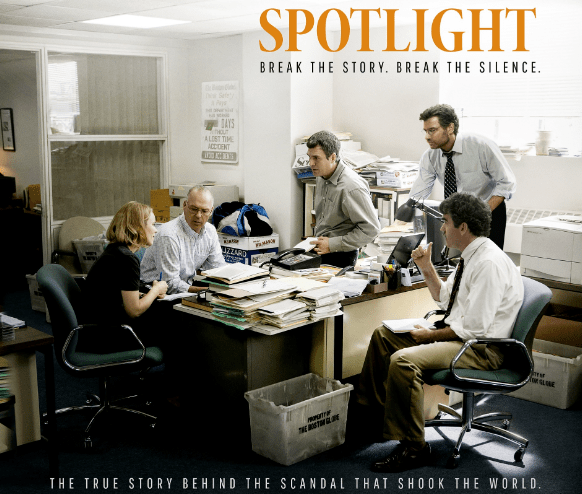
INDIANA, PA – Indiana University of Pennsylvania’s (IUP) Journalism and Public Relations Department hosted a free presentation of the film “Spotlight” on Wednesday at 7:00 p.m. in Room 225 of the Humanities and Social Sciences building. “Spotlight” is an Academy Award-winning film portraying investigative journalism and the child molestation charges brought on Boston Catholic Priests in 2001 and 2002.
The presentation of the film was followed by a panel discussion featuring IUP professors David O. Loomis from the journalism department, and Theresa Smith, who is also the Chairwoman of the Religious Studies Department.
Due to technical difficulties before the presentation began, “Spotlight” had an actual start time of 7:23 p.m. When the film ended after two hours and nine minutes, it left the audience in the large lecture hall, which was approximately half-full, shrouded in what seemed like solemn silence.
During the discussion panel portion of the event, Smith, wearing a black and white pinstripe vest, explained after the feature that child molestation cases involving priests are still surfacing today, even in areas of western Pennsylvania such as Pittsburgh, Altoona and Ebensburg.
Referring to a quote from the film, “If it takes a village to raise a child, it takes a village to abuse one,” Smith asked the audience, “Who will blow the whistle?”
“The police and the newspapers were complicit with the cover-up for decades,” Loomis said, referring to the film’s portrayal of the illegal relationship between police and media outlets and the Catholic Church in Boston at the time.
“[The film gave] great insight on what investigative journalism can do for us to shed light on atrocities,” said Ethan C. Brogan, 21, IUP senior and Vice President of IUP’s Society of Professional Journalists.
IUP Journalism and Public Relations professor and Chairwoman Michele R. Papakie also attended the presentation, and although it was the second time she had seen the film, she expressed that the film remained just as poignant to her as the first.
-
Small-Panel Reporting Examples

OBITUARY MINI:
INDIANA, PA.— Daniel V. Delaney, former president of the Indiana County Chamber of Commerce, assistant district attorney, military Captain and law enforcement officer, died unexpectedly at the Indiana County Courthouse on Thursday at age 66.
POLICE BROADCAST MINI:
INDIANA, PA. — Police are searching for a masked man who robbed the Folger Dining Hall at the Indiana University of Pennsylvania for three-thousand dollars Monday morning. The manager, unharmed, was investigating a noise heard while preparing payroll when the man charged at him and ordered him to open the safe and give him the money.
COURTROOM REPORT MINI:
INDIANA, PA. – Borough Police Officer Leroy D. Anderson charged Raihoz C. Johnson, 21, of Monroeville, with possession of a small amount of marijuana and a summary traffic offense following a traffic stop along the 800 block of Maple Street at 1:51 a.m. on Nov. 14, 2015.
A preliminary hearing occurred on Jan. 16, 2016 in front of Indiana Magisterial District Judge Guy B. Haberl, who continued the hearing and closed the case on Feb. 25, 2016 when Johnson pleaded guilty and was ultimately charged with disorderly conduct, according to court dockets issued on Dec. 1, 2015. Haberl issued that Johnson pay a total of $460.96 in court costs and fines. Johnson could not be reached for questioning regarding the case.
“In any given week, I handle roughly 2-3 cases involving a small amount of marijuana. My clients are mostly males, with just as many white offenders as black, but I’ve noticed that the black offenders are additionally charged with resisting arrest at a higher rate than whites,” AnnMarie E. Everette, Attorney at Law, and Johnson’s public defender, said.
Everette, composed very professionally in an all black pantsuit and upright posture, explained that she does believe that the local District Attorney is fair, and often does well at picking “color blind” jury pools, although because of the local demographics, racial diversity is seldom reflected in those same pools.
-
Chronic Traumatic Encephalopathy in the NFL
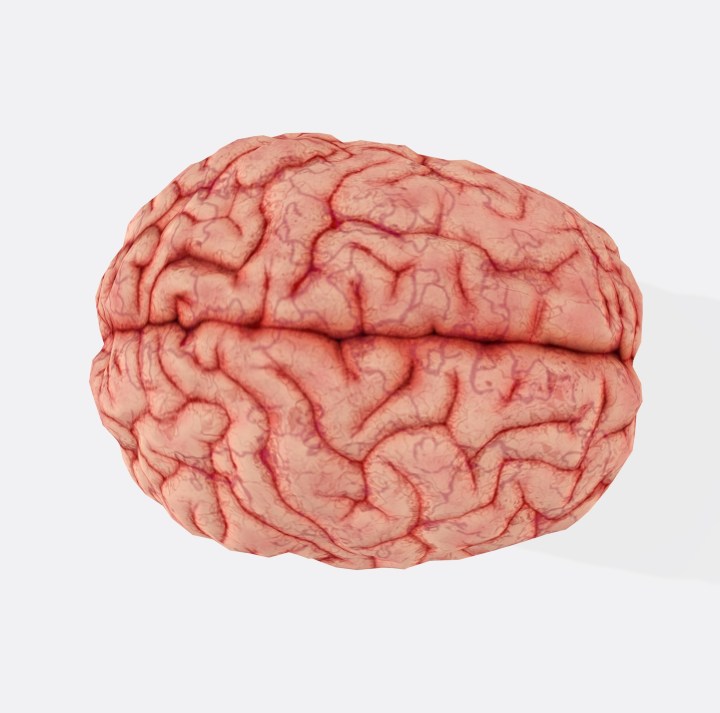
American Football has a rich history of competitive rivalry, sportsmanlike camaraderie, and incredibly talented players. For decades now, millions of America’s fans, families, enthusiasts, and critics have tuned in on Sunday to watch their favorite team play in the NFL. But for the entire time the National Football League, which is currently celebrating its 100th season, has existed, one aspect has always remained medically prevalent for the league and difficult to prevent – concussions. This is due to the physically demanding nature of the sport that often requires a player to utilize any and all parts of their body, including the head, to make a tackle, stop a drive, and be a playmaker. Concussion research has proven detrimental effects of heavy impact to a player’s head over an extended period of time, leading to a disease in the brain known as chronic traumatic encephalopathy (CTE). The NFL needs to exhaust every effort and resource to further study and understand the symptoms and effects of CTE, and take extensive preventative measures to protect the players that it pays so well.
Chronic traumatic encephalopathy is a degenerative brain disease that the medical world has been familiar with for years, but CTE carries one tricky characteristic: modern medical science is not refined enough to examine the brain for a proper diagnosis until the person is deceased. Caused by repeated head injuries, such as those suffered on a regular basis by professional athletes, a CTE sufferer might show symptoms of mood swings, irrational cognition, and memory loss. Many of these symptoms do not begin to surface until years after the trauma occurred, and since it is a degenerative illness, CTE symptoms often get worse and eventually result in dementia. This is why there is so much science that goes into the design and production of the helmets that are protecting the heads of these athletes, but there is still a strong call to action to improve.
One of the most recent, and maybe even the most notable examples of NFL players suffering from CTE is the late former New England Patriots’ tight-end Aaron Hernandez, who committed suicide while he was incarcerated for first-degree murder in April 2017; he was twenty-seven. Barlow (2017) included studies from Dr. Ann Mckee, a neuropathologist, a professor at the Boston University School of Medicine, and co-director of Boston University’s CTE Center, claiming Hernandez suffered from CTE so badly that it “would be the first case we’ve ever seen of that kind of damage in such a young individual.” An autopsy of Hernandez revealed that he had been suffering from one of the most severe cases medical professionals had ever seen. Hernandez had played football his entire life, played college ball at the University of Florida, helped lead the Patriots to the Super Bowl in 2012, and remained in the NFL for a total of three years as a popular and valuable player. He’d had a few brushes with the past, all instances of erratic behavior resulting in violence, and in June 2014 was arrested on murder charges involving a close family friend. With the story gaining media coverage of almost OJ Simpson-like proportion, Aaron Hernandez was found guilty and convicted of first-degree murder in 2015. The notion that Hernandez could possibly be suffering from CTE was not discussed, or even considered by neither the prosecution nor the defense. It was not until his self-inflicted death two years later that we would learn of his illness or how severe it was. If the NFL had taken stronger measures for the prevention, identification, and proactive treatment of chronic traumatic encephalopathy, Aaron Hernandez could have had more of a rational mentality when faced with potentially violent dilemmas.
Another important player to analyze is the late, NFL Hall of Famer and linebacker, Junior Seau, who was drafted in 1990 by the San Diego Chargers, and eventually helped lead the Patriots to the Super Bowl in 2007. With an excessive amount of concussions throughout his career, Seau suspected he had been suffering from severe CTE. He had struggled with this for years throughout his career that ultimately lasted for twenty seasons playing in the NFL, before committing suicide in April of 2012 by means of self-inflicted gunshot wound to the chest at the age of forty-three. Seau lived a wholesome life in addition to his widespread NFL fame, being a father of three and a husband for eleven years. Fainaru-Wada, & Fainaru (2013) included statements from Seau’s family pertaining to his gradual change of character for the worse, ultimately leading to his demise.
Much before that, there was Dave Duerson, former NFL safety who had a career that lasted 11 seasons, seven of which were most notably played for the Chicago Bears. Retiring in 1993, Duerson began experiencing impaired judgement, impulse control, and memory loss, before eventually committing suicide in February 2011 at the age of fifty, also by a self-inflicted gunshot wound to the chest. Gever (2011) quoted Dr. McKee who acknowledged that after a post-mortem autopsy and analysis of Duerson’s brain, both revealed and confirmed Duerson “had classic pathology of CTE and no evidence of any other disease.” In the cases of both Duerson and Seau, the chosen method of death (that specifically being a blow to the chest from a gunshot), was carried out by each player with the intention that their brains be preserved and intact enough to study afterward to formally diagnose CTE.
This is a topic that is both age-old and current in the NFL, even being the subject of the 2015 Hollywood blockbuster film, Concussion, starring high-profile actors Will Smith and Alec Baldwin. Prior to the film’s theatrical release, it managed to stir up renewed media attention and public outcry for enhanced preventative measures for the disease. Because of this focus on the matter, the NFL agreed to give funding to three different technologies to minimize and reduce the risk of concussion, including those from a company called Viconic, The University of Washington, and The U.S. Army. Roberts (2015) reported that Viconic had received $750,000 in funding from the NFL to develop preventative helmet technology while The U.S. Army and The University of Washington each received $250,000.
In addition to the media hype brought on from the release of Concussion, the NFL has taken measures in the past to minimize overall concussion rates for its players, and continues so with every passing season. Sprecher (2017) pointed out progressive steps on new reports, helmet schematics, and precautionary regulation changes on the way tackles are to be made on the field every year. In 2017 the League had implemented 50 rule changes since 2002 to further implement a player’s physical protection. Sprecher (2017) observed a 2017 NFL released statement confirming that research conducted on the brain samples of one hundred and ten former players by Boston University could not confirm that the existence of CTE was a common condition in most football players, but did reflect high occurrences in the samples provided. Even though the NFL claimed that CTE could not be confirmed as a common condition in their players, the League still supported independent medical research and engineering advancements in neuroscience related to the topics in addition to what had already been funded early on.
In conclusion, although breakthroughs in medical technology continue to advance, and the causes and awareness of CTE are steadily increasing in prevalence, we still do not have the means to perform a full, 100% diagnosis of CTE on a player until long after it is too late. With the risk and rate of concussions in the NFL being at an all-time high, it is imperative that concussion prevention for players remains at the top of the priority list for the historic National Football League.
-
Album Review: Drake – “Care Package”

Between winning a record-breaking twelve billboard awards for 2019 in May, seeing a chart-topping re-release of his first EP, and witnessing his own Toronto Raptors’ NBA championship win on the eve of his October’s Very Own (OVO) Fest, 2019 is proving to be an exceptional year for Drake. Given that he’s at the seeming peak of his career, it feels like a fitting time, then, for the rapper to look back at everything that got him here and share a gift with his supporters in the form of “Care Package,” an official compilation of b-sides, rarities, and one-offs.
In a fashion most similar to the crooner-tinged mood of February’s “So Far Gone,” a re-release of his 2009 EP (with updated, added content), the rapper brings to the table 17 unreleased throwbacks from his catalog between 2010 and 2016, most of which were previously only available via his Soundcloud page. Everything about the album screams (or sings) Drake nostalgia, all the way down to the cover art, which features the hood of an Acura TSX; Drake once had a 2004 model back when he still went by either Aubrey, or “Jimmy Brooks from Degrassi.”
Much like his previous work, “Care Package” offers the same familiar balance of songs featuring the artist singing, rapping, or both. In one standout track, “4pm in Calabasas,” Drake raps, “Mike never tried to rap like Pac, Pac never tried to sing like Mike; Those my dad’s words to me when I asked him how to make it in life; And I always said my mother gave the greatest advice.” Is this clever wordplay or a subtle jab at his own father? The world may never know.
And of course, it wouldn’t be a true Drake album without at least one spiteful “I made it” track aimed at those who doubted his career; “How Bout Now” delivers just that with the line “I used to always try to burn you CDs of my new shit; You be like ‘who’s this?’ I be like ‘me girl,’ you be like ‘Oh word, true shit?’ Then ask if we can listen to Ludacris.”
Yep, life for Drake is pretty good right now, and you might say “Care Package” has him feeling “B-side” himself with joy.
-
Album Review: Chance the Rapper – “The Big Day”
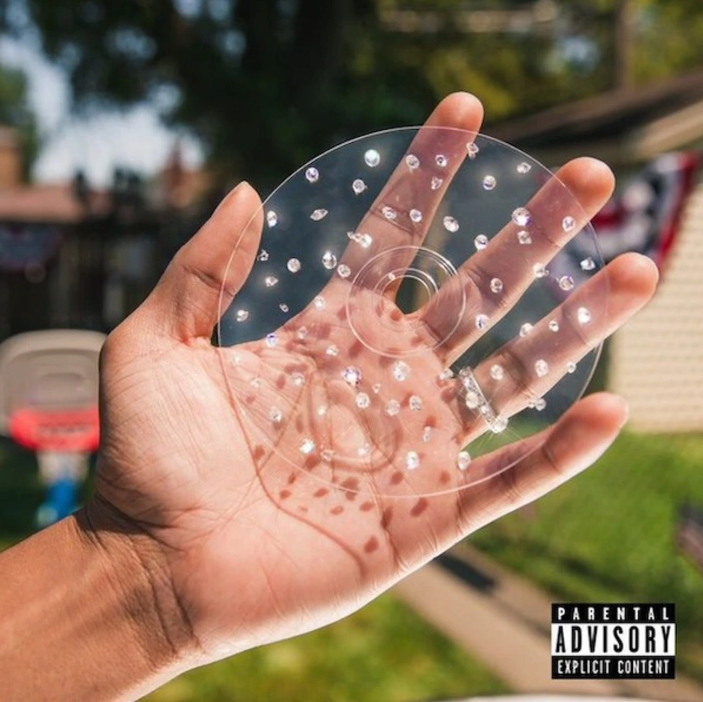
“The Big Day” is finally upon us.
Fans have been waiting for a debut album from Chance the Rapper ever since his first mixtape dropped in 2012, and he wasn’t ready to end that wait even once the release date finally arrived. Instead of dropping his album at midnight PST as is customary, he held the release back until the clock struck noon in Chicago on July 26th, a playful wink to his hometown and a move he was able to get away with because the wait for “The Big Day” was worth every extra hour.
It’s been just over three years since Chance released his Grammy-winning third mixtape, 2016’s “Coloring Book,” and he’s made sure to give us all a follow-up that delivers on the promise of that album and the mixtapes that came before it.
“The Big Day” is a fun-for-all-ages musical journey. It contains an impressive 22 tracks, including three skits, and boasts a substantial and diverse number of A-list features, with Justin Vernon (Bon Iver), Ben Gibbard (Death Cab for Cutie), MadeinTYO, DaBaby, John Legend, Ari Lennox, Francis and the Lights, Megan Thee Stallion, Gucci Mane, Nicki Minaj, and Shawn Mendez all making appearances.
As for a theme, Chance had one in mind for his big debut. In an interview with Zane Lowe, he said, “The whole album has been inspired by the day that I got married, and how I was dancing that day.”
Ultimately, Chance remains loyal to his familiar sing-songy style on his debut, with clever wordplay flowing throughout the work. The album’s mood is funky, upbeat, and nostalgic — think the vibe at a ‘90s wedding, which makes sense, given that Chance told Zane Lowe, “The whole album has been inspired by the day that I got married, and how I was dancing that day.”
Chance goes for smiles with cuts like album opener “All Day Long,” “Eternal” and “Found A Good One.” He flexes his “Acid Rap” muscles with “Hot Shower,” “Roo,” and “Handsome,” while highlighting his thoughtful side with the insightful “Do You Remember” and “5 Year Plan.” Ultimately, Chance’s ability to expertly blend these components with meticulous precision is what makes the album not just “Big,” but truly glorious.
-
Album Review: Blueface – “Dirtbag”

It’s only been one year since Jonathan Porter decided to hang up his college football helmet and hit the stage as Blueface, but he’s already seen his share of the trials and tribulations that accompany a young rapper on his come-up. The 22-year-old first saw success with his album “Famous Cryp” in June 2018, and five months later. he was arrested and later released from custody for chasing down and shooting at a suspect after being robbed at a nearby gas station. Now, backed by the Cash Money West label, he’s delivered “Dirtbag”, and boy, does he have some stories to share.
Aside from the somehow overseen misspelling of “Blue Face” as “Blueface” printed on the cover, “Dirtbag” is impressively composed, chock-full of club bangers and street anthems, all showcasing the rapper’s signature aggressive, off-beat style. The 8-song EP also hosts features from both contemporaries (Rich the Kid, Lil Pump) and seasoned rap veterans
alike(The Game, Mozzy, Offset).On the song “Disrespectful,” Blueface provides a small window into his personal life with the lines, “On my mom and my sis; had to kick my own blood out; they must have forgot I was a crip.” — A line referring to an incident that occurred earlier this year at the rapper’s house, when he had to evict his relatives following a conflict involving his mother, sister, and his two girlfriends, who were all living with him at the time. The confrontation began to get violent and resulted in Blueface calling the police to remove his family members
Blueface recently sat in the studio with BigBoyTV, and when asked how many females he’s slept with in the last six months, he replied, “Probably like, a thousand.” He later admitted that his original figure may have been exaggerated, but it’s clear the rookie rapper is having one heck of a busy year, both personally and professionally. The sky’s the limit for Blueface, and while we enjoy his “Dirtbag” EP, we can’t wait to see what he’ll bring to the table with a debut label full-length.
News, Reviews, Poetry, Storytelling
 Keith Hudak